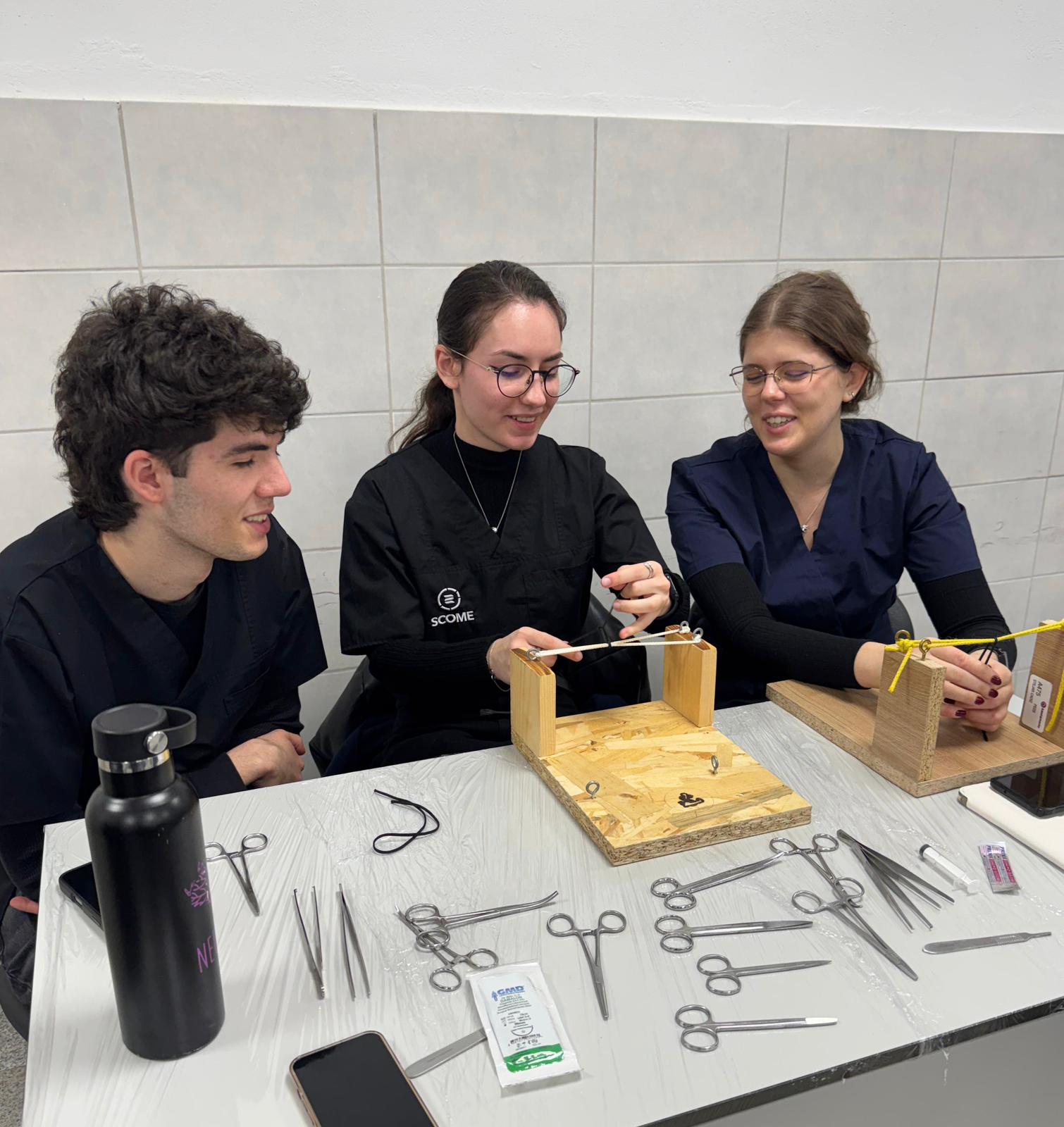
Precision starts with the perfect knot. Every surgical intervention, from a simple laceration repair to complex trauma stabilization, relies on the clinician’s mastery of foundational surgical techniques. This workshop is meticulously designed to transition participants from basic manual skills to clinical case application. Organized by the SCOME (Standing Committee on Medical Education) LSTGM team, the session provides a deliberate practice environment for mastering the manual dexterity required in the ED.
The workshop is divided into intensive practical modules covering Knot Tying (one-handed, two-handed, and instrument ties) and Suturing Techniques (simple interrupted, continuous). Working with high-quality surgical instruments and realistic skin models, you will prioritize tissue handling and wound edge eversion. Moving beyond simple technical practice, the session concludes with Case Scenarios where you must select the appropriate suture material and technique for specific clinical presentations—ranging from high-tension joint injuries to delicate facial lacerations. With a focus on symmetry, strength, and procedural logic, Surgery 101 ensures you have the foundational confidence to act decisively when a patient’s recovery depends on your surgical precision.
LSTGM SCOME
PRACTICAL INFORMATION
Rules, Check-In, and Direct Contact
Check-In and What to Bring
Recommended arrival: 15 minutes before workshop start at the location.
Please bring surgical scrubs with you.
Firm Rule and Policies
• Late-arrival policy: after 15 minutes, your access may be revoked.
• Cancellation policy: organizers may adjust date, room, or instructors if operationally required.
• If a session is cancelled, participants are notified via dashboard and email.
Direct Workshop Contact
For operational questions, write to stiintific@congrems.ro with subject: Workshop + Participant Name.
LEARNING GOALS + LOCATION
What You Will Learn and Where the Workshop Takes Place
• Master foundational knot-tying techniques (instrument and manual).
• Execution of prioritized suturing patterns (Simple, Mattress, Subcuticular).
• Correct selection of suture materials and needles for specific tissues.
• Strategic wound management logic through clinical case scenarios.